Sightseeing
Rethymnon is a wonderful place to visit in the summer for an unforgettable vacation
Explore Ρετηυμνο
Small City. Big Attraction.
01.
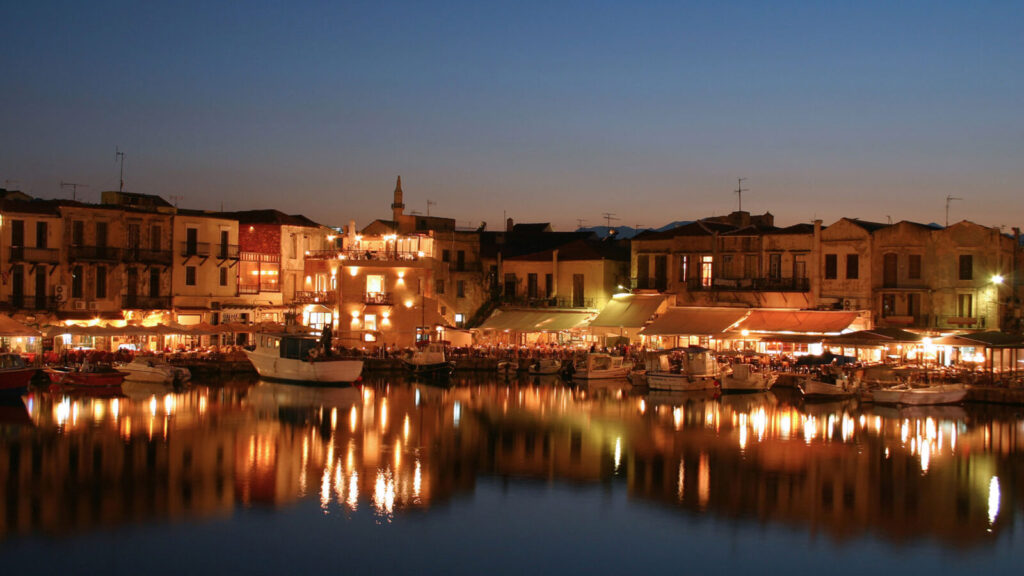
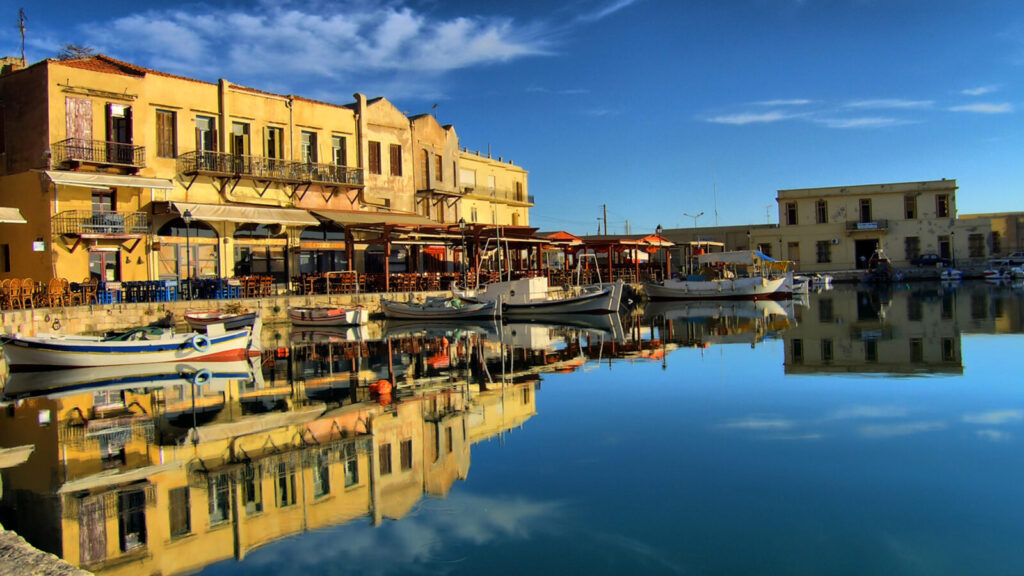
Venetian Harbor of Rethymnon
02.
Fortress Fortezza in Rethymnon
Fortress Fortezza in Rethymnon
The fort is so large that it could host and protect the entire population of the town. Inside the fort there are several barracks, a church, a hospital and some storage rooms.
The Main Gate is located between the bastions of St. Nicholas and St. Nicholas, because access to the city from there was easier. The main gate is a large gallery, which allows the easy passage of wagons and weaponry. By the entrance you meet the armory, which is a large two-storey building with arches in the interior, which now hosts cultural events and exhibitions.
Walking towards the bastion of St. Elias, you will see one of the many tanks of the castle, used for collecting water from the roofs. There is also the theater “Erofili”, hosting events every summer.
Moreover, near the central square of the fort, stands the beautiful mosque of Sultan Ibrahim, which was originally Christian. Close to it, you see the modern church of St. Catherine.
Additionally, there are few remains of the governor’s house and many smaller houses. You can even see the house of one of two consultants and the warehouses near the north walls, which are located on a very high altitute.

03.
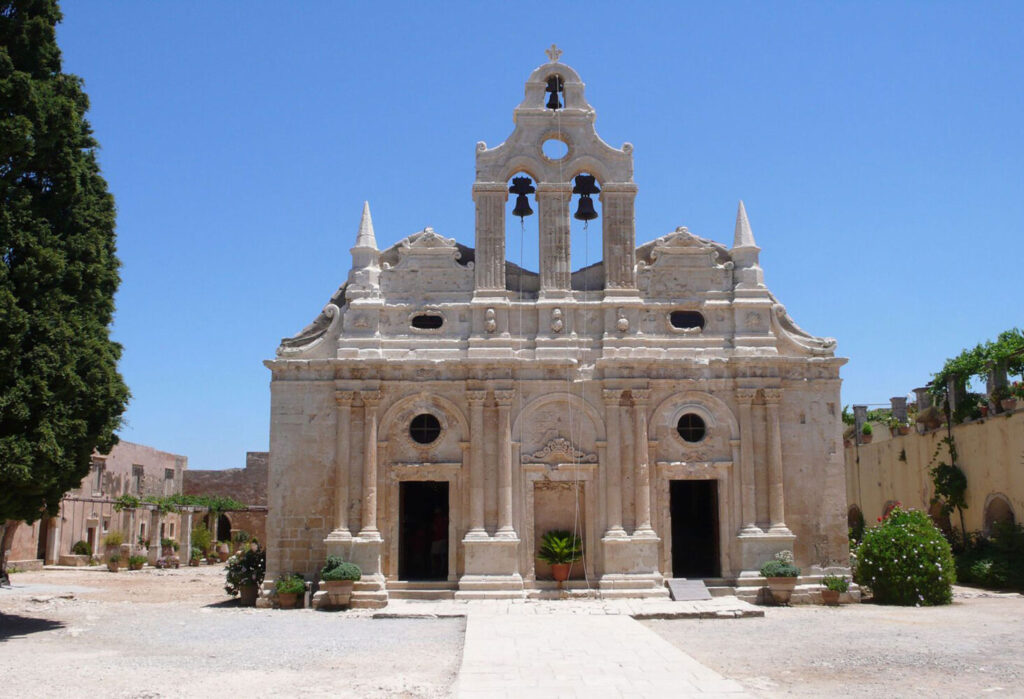
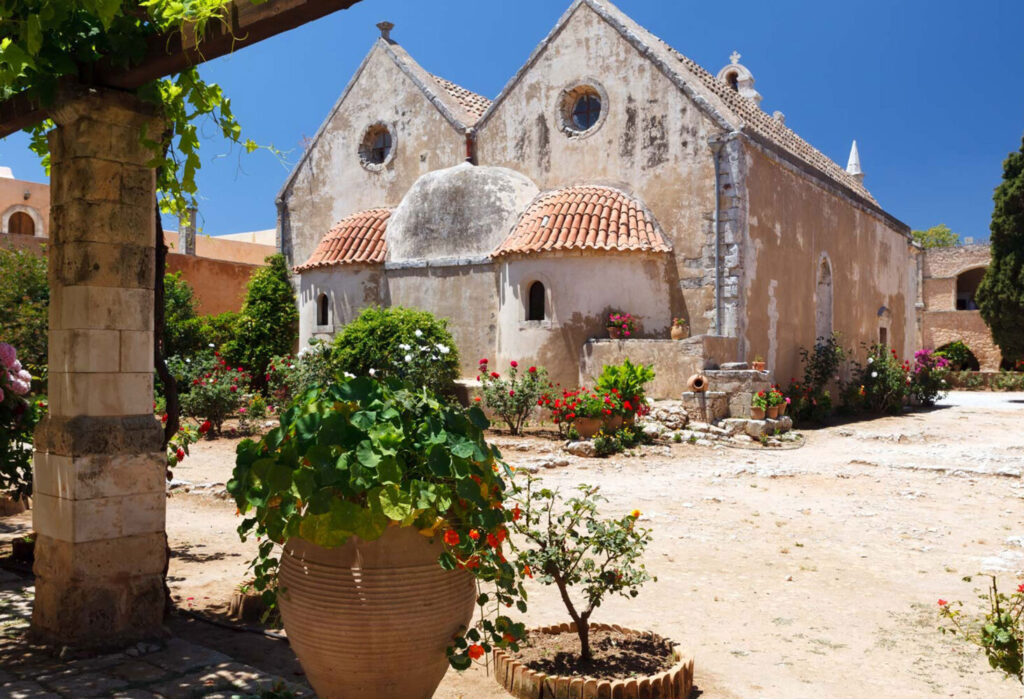
Arkadi Monastery
04.
Archaeological Museum of Eleftherna
Archaeological Museum of Eleftherna
The largest Hall A includes exhibits selected for a short presentation of the public, political, religious, social and private life of Eleftherna, but also objects imported from other Cretan cities and regions such as Attica, the Peloponnese, the Cyclades, the islands of the eastern Aegean, Asia Minor, Cyprus, Phoenicia and generally Syropalestinian coast, Egypt. It hosts a bronze shield that was found in the grave of the "warriors" and is dated between 830-820 BC and 730-720 BC. Next, copies of the shield are used for educational purposes, allowing visually impaired people to "read" through palpation.
Hall B houses the religious and devotional life in Eleftherna, from the Early Iron Age to the Byzantine period. It also presents the Monument 4A-memorial-shrine, which is interpreted as a cenotaph, becoming one of the first monuments dedicated to the "unknown" soldier in world history. The room houses one of the most important findings of the Necropolis of Orthi Petra, the "Lady of Eleftherna", which is related to the dedalic statue "Lady of Oser" in the Louvre Museum in Paris.
Hall C is dedicated to the necropolis of Eleftherna. Here are exhibited only finds from excavations in the necropolis of Orthi Petra, as in this are illustrated descriptions of the Homeric world, such as the ritual of burial fire (burning), such that the funerary pyre of Patroclus described in the Iliad (rhapsody y). Here is exposed the unique funerary pyre with the dead. In the same room visitors meet the aristocrat priestesses of Eleftherna with all their brilliant and exquisite jewelry and glass, earthenware, clay and bronze vases, figurines etc.